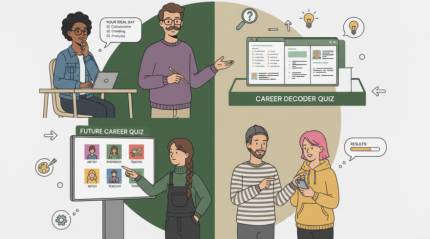
Future Career Quiz: Explore Your Next Calling
- 22 December 2025
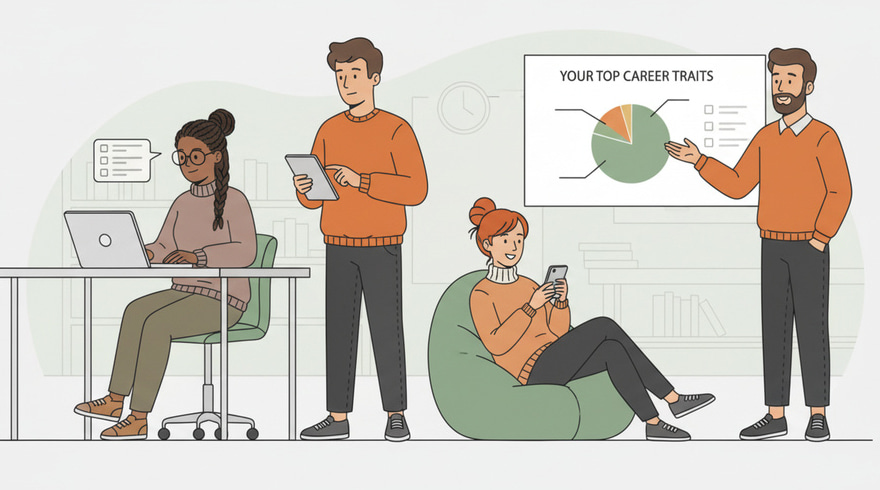
Find Your Future Career With a 5-Minute Quiz
Get StartedWhat This Assessment Is and Why It Works
Choosing a path that fits your strengths, interests, and values is more than luck; it’s a structured decision that blends psychology with labor-market insight. Modern assessments distill your preferences into patterns, then map those patterns to career families that promise motivation and momentum. Instead of guesswork, you get a data-informed starting point that reduces anxiety and clarifies your options.
Beyond generic advice, a future career quiz transforms self-knowledge into practical direction by connecting personality drivers to work environments, task types, and team dynamics. The method uses validated constructs like interests, traits, and work styles to highlight roles where you’re likely to thrive, not just survive. With clear language and grounded recommendations, the experience reframes exploration as a confident, repeatable process.
If you’ve ever wondered how measurements become guidance, the engine behind these assessments uses item response theory, adaptive branching, and normed scoring. In plain terms, the test gets smarter as you answer, and your profile is compared to reliable benchmarks. For anyone curious about measurement rigor, people often ask, “So, whats my future career quiz really capturing?” The short answer is preference stability, cognitive orientation, and values alignment, synthesized into actionable outcomes. You finish not just with suggestions, but with vocabulary to articulate what you want, and why it fits.
- Turn ambiguity into a shortlist you can act on.
- Translate personal patterns into role realities.
- Build language you can use in interviews and applications.
How the Assessment Works Under the Hood
Great guidance starts with great questions, and the best systems use psychometrics to cut noise and surface signal. You’ll see items about task enjoyment, collaboration comfort, problem complexity, and creativity appetite. Scores blend into interest themes, temperament indicators, and value priorities. That integrated profile is then matched to real occupations that share your configuration.
Many platforms package robust research into approachable experiences, and some learners gravitate toward the big future career quiz because it feels comprehensive without being overwhelming. The secret is adaptive logic: it routes you around irrelevant items and focuses on pivotal distinctions. The result is fewer questions, higher accuracy, and outcomes that resonate when you read them.
From the user’s perspective, reflections and clarity matter as much as accuracy, which is why people appreciate that “this feels like my future career quiz” rather than a generic template. You’ll often receive multiple tiers of results: top matches, promising alternates, and “stretch” roles to research. These tiers prevent tunnel vision and invite experimentation, which is essential when career identity is still forming.
- Adaptive items reduce fatigue and improve precision.
- Normed scoring ensures your results are contextually meaningful.
- Clear dashboards make your profile easy to understand at a glance.
Benefits, Use Cases, and a Quick Comparison
Career exploration becomes exponentially simpler when you can see how your patterns align with actual roles. Whether you’re a student, a career changer, or a returner, guided prompts help separate momentary interests from durable preferences. After reviewing your profile, you can map learning paths, certifications, and projects that move you closer to roles you’ll enjoy.
For people starting a search, it’s empowering to use the find your future career quiz recommendation to build a shortlist of majors, apprenticeships, or micro-credentials. Clarity accelerates momentum, and an evidence-based shortlist prevents decision paralysis. When you share your report, mentors can give targeted feedback, and hiring managers can see your strengths in context, making networking conversations more concrete.
Teachers and coaches also rely on structured comparisons to guide advising sessions, which is where concise overviews shine, and that includes the type of clarity you expect from your future career quiz results when you want to weigh options quickly. The matrix below distills core profile dimensions into outcomes you can immediately apply to planning.
| Profile Dimension | What It Reveals | How to Use It | Next-Step Ideas |
|---|---|---|---|
| Interest Themes | Work you naturally enjoy and sustain | Prioritize roles high in preferred tasks | Shadow a pro; take a project-based course |
| Work Style | Environment and collaboration preferences | Target team structures that fit your rhythm | Join clubs; try agile or independent projects |
| Values | Motivators like impact, autonomy, or stability | Compare employer cultures with your drivers | Informational interviews; culture audits |
| Strengths | Abilities you can leverage quickly | Seek roles where strengths are day-one assets | Skills portfolio; competency-based resume |
| Growth Areas | Skills to upskill or reskill | Plan learning sprints toward target roles | Bootcamps; micro-credentials; mentorship |
- Translate insights into concrete learning plans.
- Use your profile to filter job boards intelligently.
- Share results to guide targeted mentorship.
Designed for Students, Parents, and Educators
Early exposure to pathways builds confidence and reduces the pressure of “picking perfectly.” When exploration starts young, curiosity evolves into capability as learners test interests through projects, clubs, and short courses. Supportive adults can scaffold these experiences so students feel guided rather than pushed, which sustains motivation over the long term.
In many schools, counselors deploy the future career quiz kids module to spark curiosity early, pairing it with capstone projects and career days. The aim is to translate playful discovery into an understanding of real occupations and the learning that underpins them. When exploration is framed as ongoing, students internalize that choices can be reassessed as they gain experience.
Parents frequently ask how to help without pressuring, and coaches often field versions of “how do I frame the conversation,” which is why a clear guide that answers “hey, whats your future career quiz trying to show me” can be a helpful anchor during family discussions. By focusing on strengths and values rather than prestige, you create conditions for better-fit decisions, and fewer costly detours.
- Bring results to advisor meetings to focus the discussion.
- Turn insights into electives, clubs, and internships.
- Use project-based learning to test-fit potential roles.
Step-by-Step: From Quiz Results to Actionable Plans
Insights only matter if they lead to movement, so transform your report into a personal roadmap. Start by highlighting three strengths and three values the assessment surfaced. Then map each to specific tasks in roles you’re considering, and identify evidence you can build within weeks, not months.
When motivation dips, it helps to reconnect with your initial curiosity, which is why many people say a reminder prompt nudges them to revisit results and to get my future career quiz report into a living document with goals and deadlines. Pair your reflections with measurable experiments like a weekend build, a volunteer sprint, or a short certification to verify fit.
Shortlists are more effective when you track progress, and many learners create a simple dashboard after thinking, “could I keep using my future career quiz free tools for quick check-ins between milestones?” That lightweight cadence ensures momentum and reduces the cognitive load of big decisions. Each small win compounds, making the next step easier to take.
- Define 30–60–90 day experiments aligned to top matches.
- Schedule weekly reflection to adjust your plan quickly.
- Collect artifacts, projects, notes, feedback, into a portfolio.
FAQ: Quick Answers to Common Questions
How accurate are the results?
Accuracy improves when tools blend validated models with clear item design and representative benchmarks. You’ll get the best signal when you answer honestly and reflect on the narratives in your report, because self-awareness multiplies the value of any assessment.
Is there a no-cost option I can try first?
Many platforms offer a basic tier that is helpful for initial exploration, and users often start there before deciding whether they need deeper reports, coaching, or premium features, which is why you may appreciate a free future career quiz to sample the experience before committing.
How should I use the results to choose a major or course?
Treat the output as a hypothesis generator, not a verdict. Translate the top themes into a few targeted classes or projects, then assess enjoyment and performance. Iteration beats instant certainty when building a durable path.
Can these tools suggest future-proof roles?
Good systems incorporate labor trends, automation risk, and skill adjacencies. You still need to validate locally through informational interviews and job postings, yet the broader patterns help you steer toward resilient, evolving domains, especially when you sample a future career prediction quiz free resource that surfaces trend-aware matches.
What if my results don’t match what I thought I wanted?
That’s a signal to run experiments, not abandon your goal outright. Compare the underlying drivers of your target role with your profile, and look for adjacent roles that preserve what you value while improving daily fit. Small pivots can keep your vision intact while increasing satisfaction.